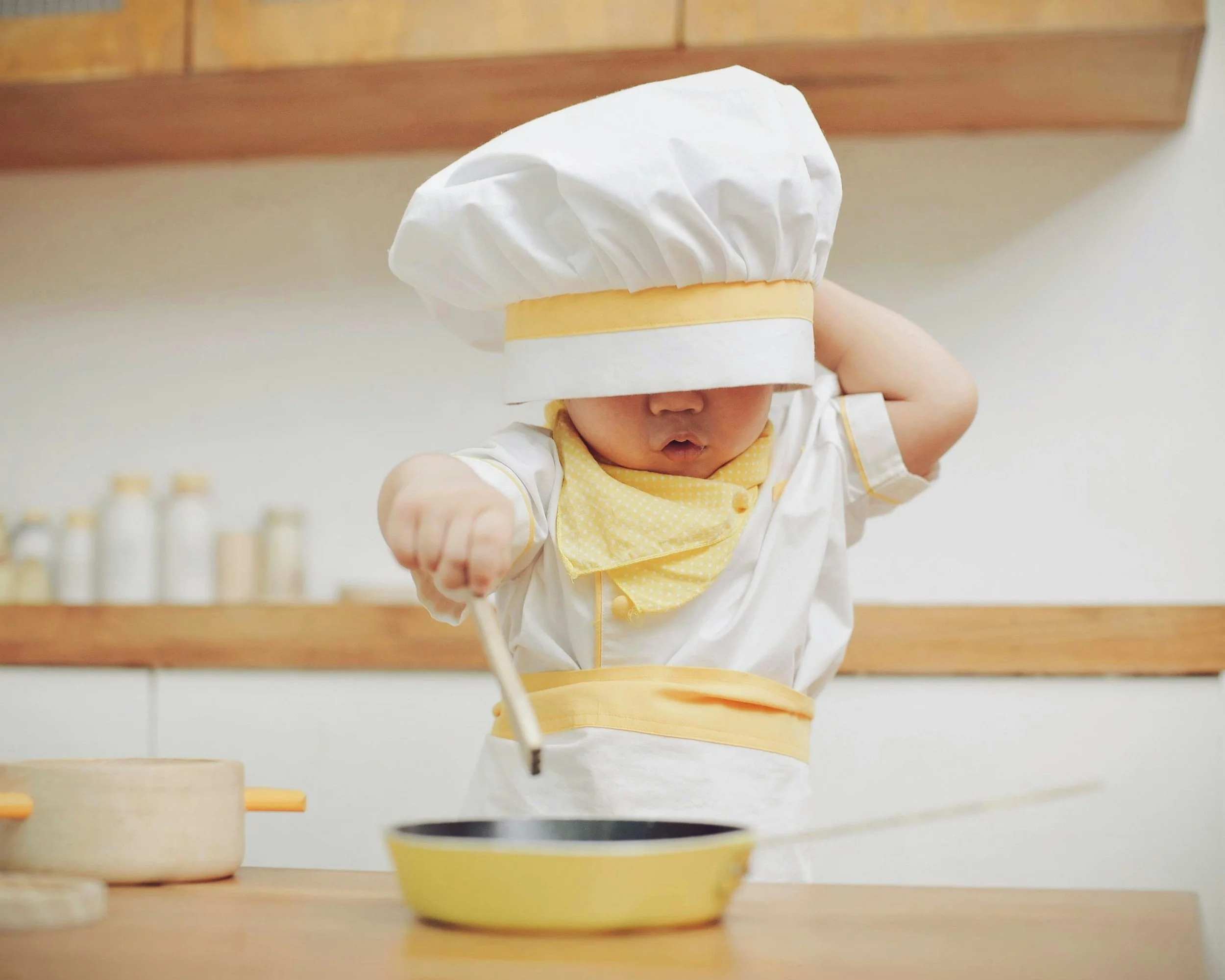
The Nourish Approach
We work in the space between what an early learning service intends around food and what children actually experience each day.
The Nourish Approach brings together nutrition, early childhood pedagogy, kitchen systems and respectful, choice-based feeding. We help services close the gap between what is planned in policies, menus and kitchens and what happens when food reaches the table.
New to Nourish? (more to come)
The eating experience begins before the first bite
Long before a child tastes the food, their experience of the meal has already begun.
It begins with the menu, the ingredients and the care taken in the kitchen. It continues as the meal moves into the room: when it is served, how children arrive at the table, what the space feels like and how adults settle alongside them.
Before anyone says a word, children are already taking things in.
Is this a calm and familiar place?
Is there something here I recognise?
Do I have time to find my own way into the meal?
Will the adults listen to what my body is telling me?
Nourish invites us to look beyond whether a child ate—or how much. Instead of beginning with, “How can we get children to eat?”, we can pause and wonder:
What is already helping this child find their way into the meal?
A small place to begin
Tomorrow, notice the meal from the child’s point of view. What is the first thing they see, hear or feel as they come to the table?
Every meal tells part of the story
Mealtimes are made up of many small moments: food arriving at the table, children recognising familiar ingredients, serving themselves, talking with others, deciding what and how much to eat, or taking time to become comfortable with something new.
Some meals feel calm and connected. Others feel rushed, unsettled or harder to understand. A child may eat eagerly one day and very little the next. A familiar dish may be welcomed by one group and barely touched by another.
Each of these moments tells us something, but no single moment tells us the whole story.
What happens at the table is connected to many other parts of the day:
the decisions leaders make and the expectations the team shares;
the menu, ingredients, recipes and support available in the kitchen;
the noise, lighting, seating and layout of the space;
the timing of the meal and the transition to the table;
the roles adults take and the language they use;
how children can see, reach, serve and explore the food;
the experiences that help familiarity and confidence grow over time.
When these parts come together well, the meal often needs less adult direction. When something feels unsettled, Nourish helps teams pause, notice what is already working and wonder where one small adjustment might help.
One mealtime gives us a moment to notice. Patterns over time help us understand the wider story.
A small place to begin
Tomorrow, choose one mealtime moment to notice without trying to change it. What happened just before the moment—and what might it be telling you?
The food is part of the environment, the ingredients are part of the learning, and the kitchen is part of the pedagogical system
The four pillars of Nourish
Nourishment begins in the kitchen
Before a child arrives at the table, many decisions have already shaped their nourishment.
Someone has planned the menu, chosen the ingredients and considered how different meals will work together across the day and week. In the kitchen, those ingredients become food through decisions about flavour, texture, colour, cooking and presentation.
The chef or cook holds valuable knowledge about what is practical, how ingredients behave and how nutrition guidance becomes real food. Yet this knowledge is not always included in wider conversations about children’s eating. The kitchen can become separated from teaching practice, with the chef receiving feedback mainly through empty—or uneaten—plates.
Nourish helps bring these perspectives together. When chefs, educators and leaders share what they know, the team can better understand the food, the child’s experience and the many factors shaping what happens at the table.
Good nourishment does not depend on every child eating every part of every meal. It is built into the offer: regular opportunities to eat, varied and recognisable foods, familiar ingredients alongside growing variety, and menus that provide nutritional balance over time.
The systems around the kitchen matter too. Time, equipment, budget, recipes, ordering and communication all influence what can reach the table consistently. When these systems are well supported, the chef has more room to cook with care and children receive food they can gradually come to know.
Adults remain responsible for the quality and variety of what is offered. Children decide what they are ready to eat and how much their bodies need.
Nourishment is built into the food and the systems that bring it to the table.
A small place to begin
Tomorrow, ask the chef or cook:
What is one decision you made when preparing today’s meal that the rest of us might not see?
The environment is part of the meal
A child’s experience of a mealtime begins before anyone says a word—and before the food reaches the table.
It begins with the ingredients chosen and the care taken in the kitchen. It continues through the way the food is prepared and presented, the transition into the meal, the light and noise in the room, and whether the people around the table seem hurried or settled.
Reggio Emilia invites us to think of the environment as the third teacher. Around food, that environment includes more than the dining space. The kitchen, the meal and the table are all part of what children encounter.
Together, they quietly communicate:
This is what we are eating today.
This is how you can take part.
There is time to arrive and look.
You can begin in a way that feels comfortable to you.
Calm is not something children create on their own. Adults help shape the conditions around them: a meal that is easy to recognise, food they can see and reach, a predictable rhythm and adults who are able to settle alongside them.
Sometimes adjusting the food, table, space or transition offers more support than another reminder. When the kitchen and room are working together, the whole environment can help children find their way into the meal.
The environment is already teaching—from the kitchen bench to the child’s place at the table.
A small place to begin
Tomorrow, follow one meal from the kitchen into the room. What is helping children understand, approach and participate in it—and where might one small change make that journey easier?
Respect is felt in how we respond
Eating is personal. Children bring their own appetites, preferences, sensory experiences and feelings to the table—and these may change from one day to the next.
Respect is felt in the way adults respond. We can remain warm and interested without praising a child for eating, showing disappointment when they do not, bargaining for another bite or comparing one child’s plate with another.
When a child hesitates or says, “No thank you,” we can receive that response calmly. Food remains food: it doesn’t need to become a reward, something to be earned or a measure of whether a child has done well.
This does not mean stepping away from our adult role. Adults continue to plan and prepare nourishing food, provide a predictable rhythm, make participation possible and remain available throughout the meal. Children have room to decide what to eat from what is offered and how much feels right for their body.
A successful mealtime can look different from one child—or one day—to the next. It might include eating with enjoyment. It might also look like sitting comfortably with others, serving something unfamiliar, recognising an ingredient or simply knowing that “no thank you” will be heard.
Respect also travels between the table, kitchen and family. The way we talk about a child’s eating can either carry calm observation or pass concern and pressure from one adult to another. A shared understanding helps the child receive the same steady message from everyone around them.
Respect means staying connected to the child without making their eating the focus of the relationship.
A small place to begin
Tomorrow, notice how you respond when a child eats very little—or eats enthusiastically. Can your warmth and attention remain the same?
Structure makes genuine choice possible
Children can relax into eating when adults take care of the structure. This begins with a planned menu, suitable ingredients, dependable kitchen systems and regular opportunities to eat. It continues through familiar routines, food that arrives as expected and calm, clear boundaries at the table.
Within that structure, children have choices that genuinely belong to them. They can decide whether to eat, what to choose from the food available, how much feels right and how closely they are ready to engage with something unfamiliar.
When these roles become unclear, children may be asked what should be served, find themselves negotiating for another option or begin carrying an adult’s concern about whether they have eaten enough. What appears to offer greater freedom can instead create uncertainty.
Clear structure allows children to participate without becoming responsible for the whole meal. They can share preferences, help with preparation and serving, choose from what is available and gradually take on more responsibility as their skills and confidence grow.
The kitchen helps make these choices possible. The chef or cook can provide variety within a dependable menu, include recognisable elements alongside less familiar foods and prepare meals so children can see and choose from what is available. Clear communication between the kitchen and room helps the whole team maintain the same dependable structure.
The kitchen builds the choices into the meal; educators help children experience those choices at the table.
A small place to begin
Tomorrow, notice one choice offered at the table. Is it clear, manageable and genuinely the child’s to make?
Adults hold the structure so children have room to make the choices that belong to them.
What is our food philosophy?
Every early learning service has a food philosophy, even if it has never been written down.
We can see it in the food chosen for the menu, how meals are served, the roles children and adults take, and the way we respond when a child chooses not to eat. It is also reflected in which foods and ways of eating feel familiar and valued.
A food philosophy brings the team’s thinking into the open. What do we hope children will experience around food? How will we provide nourishing meals while making room for choice? How do the cultures, knowledge and food traditions of families shape what happens here?
There is no single food culture that will fit every service. Nourish helps teams notice what they already do, talk about what matters to their community and bring greater consistency across leadership, the kitchen and teaching practice.
Because a food philosophy is more than a statement on paper. It is what children come to know through the meals and messages they experience each day.
A small place to begin
At your next team conversation, ask:
What do we hope children will remember about eating here?
That one question can open the door to nourishment, culture, belonging, relationships and autonomy without presenting the reader with a philosophical checklist. The more detailed questions can move into the downloadable food-philosophy reflection sheet, where they will be useful rather than overwhelming.
Where food philosophy becomes practice
The kitchen is where a service’s nutritional intentions and food philosophy become the meals children encounter each day.
Chefs and cooks bring culinary and operational knowledge to this work—choosing ingredients, building flavour, managing dietary needs and finding practical ways to make good food work within the realities of a busy kitchen.
When the kitchen, rooms and leadership are connected, the whole system works better. Menus can balance familiarity with discovery, feedback becomes more useful than “They didn’t eat it,” and recurring challenges can be solved together rather than landing with one person.
This connection needs practical systems behind it: thoughtful menu planning, organised recipes, reliable preparation rhythms, good communication and creative ways to use ingredients well.
Nourish looks beyond compliance to the systems that make kitchen work easier, more visible and more enjoyable—and help good food happen consistently.
The kitchen holds the knowledge, systems and creativity that bring a service’s food culture to life.
A small place to begin
Ask the chef or cook:
What is one part of your work that could be made easier—or better understood—by the wider team?
Adult structure makes genuine choice possible
Adults are responsible for what, when and where food is offered. Children decide whether and how much to eat.
In an early learning setting, leaders, chefs and educators share the adult role. Together, they provide a varied, nourishing offer, a dependable routine and calm, respectful boundaries. Children choose from what is available, listen to their bodies and approach unfamiliar food at their own pace.
This is not a way to produce immediate eating outcomes. It builds trust, confidence and a sustainable relationship with food over time.
Adults hold the structure; children make the eating decisions that belong to them.
A small place to begin
At the next meal, notice one eating decision a child makes. Can the adults remain warm and available without persuading, praising or stepping into that decision?
Choice-based eating begins before the table
Choice-based eating begins with the whole service—not with educators trying to create choices once the food arrives.
Leaders make space for it. Chefs and cooks build it into meals by keeping some ingredients visible, placing familiar foods alongside growing variety or serving a topping on the side. Educators then support children to see, reach and choose without persuasion or judgement.
Children are not being asked to make the “healthy” choice. Adults have already created a nourishing offer. Within it, children can choose what and how much to eat, combine foods or keep them separate, and return for more.
The kitchen builds choice into the meal; educators make room for children to use it.
A small place to begin
Choose one meal. Could one small change give children a clearer choice without creating extra work or another meal?
Why pressure and persuasion are not the answer
We do not pressure children to eat here. That includes gentle encouragement, not only forcing or insisting.
Comments such as “Just try one bite” or “The cook made it especially for you” usually come from a caring place. But they can make children feel that we are waiting for them to eat—or that eating will please us.
Our role is to offer the meal, sit alongside children and help them participate. We can talk about the food and enjoy eating together without convincing anyone to taste or take another bite.
If you find yourself doing a lot of encouraging, pause. Perhaps the food is hard to see or reach, the serving feels overwhelming, or the child needs more time to settle and become familiar. Sometimes, they simply do not want that food today.
Gentler words can still create pressure if we are hoping for a particular response.
Offer the food, stay warm and interested, and let the child decide what happens next.
A small place to begin
When you feel tempted to encourage another bite, pause and allow the child’s response to be enough.
Shared language: what we say and how we say it
Language shapes the feeling around the table. The same calm approach should travel between leaders, chefs, educators and relievers, so children are not meeting different expectations from different adults.
This is not about memorising the “right” phrases. It is about noticing what our words are asking a child to do. Are we offering, describing and staying alongside—or quietly persuading, judging or seeking reassurance?
Sometimes respectful language is simple:
“It’s here if you want it.”
“I notice this one is crunchy.”
And sometimes, nothing needs to be said.
Shared language helps adults hold steady, so children do not have to defend their appetite.
A small place to begin
Listen to the language around one meal. What could the team say less of—and what might not need to be said at all?
Curiosity can begin without eating
Children can learn about food without being asked to taste it.
They might hold, smell, listen to, open, draw, grow or transform an ingredient—discovering the pattern inside a cabbage, the scent of crushed herbs or the way flour changes when water is added.
Drawing on Reggio Emilia, we can think of the kitchen as an atelier of taste and relationship. A chef might create a simple ingredient provocation, while an educator follows the questions and discoveries that emerge.
The encounter remains open. Tasting is possible, but it is not the measure of success.
Food becomes familiar through many kinds of encounter—not only through eating.
A small place to begin
Choose one ingredient from next week’s menu. How might children meet it without being asked to taste it?
Let the food do the talking
Pedagogy of the Plate grew from years of observing what happened when food reached the table.
I found that small decisions made in the kitchen—how an ingredient was cut, where it was placed and what sat alongside it—could change the way children approached a meal. Often, the food could create interest and make choice possible before an adult said anything.
This was not about disguising ingredients or producing elaborate platters. It was about presenting ordinary, real food with intention.
A familiar food might sit beside something new. Ingredients could remain visible. Pieces could be easy to recognise, reach and share. Children could combine foods or keep them separate, take a little and return for more.
The plate became more than something to eat from. It became a quiet invitation to notice, choose and participate.
This is what Nourish calls Pedagogy of the Plate: the place where culinary knowledge, nourishment and children’s learning meet.
When we let the food do the talking, adults can say less.
A small place to begin
Look at one meal through a child’s eyes. What does the food itself invite them to notice or do?
What this looks like in everyday practice
The Nourish Approach is often visible in small, ordinary moments.
A familiar food sits alongside something less familiar. Food is placed within reach, with manageable portions and more available. Children can see what has been offered, serve themselves where appropriate and decline without having to explain.
Adults sit alongside children rather than directing the meal. The food is allowed to create interest without being hidden, praised or persuaded into a child.
Behind the scenes, the kitchen and room share observations. A cook receives more useful feedback than “They didn’t eat it,” and the team becomes curious about patterns before changing the menu.
Sometimes food travels beyond the table—into a book, a conversation, a garden or an encounter with an ingredient.
None of this needs to look remarkable. Often, the clearest sign that the system is working is that no one has needed to intervene.
When the system holds, children do not have to carry it.
Informed by pedagogy, development and food
The Nourish Approach brings together early childhood pedagogy, respectful care, child development, taste education and the practical knowledge held within kitchens.
It is informed by Te Whāriki, Reggio Emilia and respectful care traditions that recognise children as capable participants and everyday routines as places of relationship and learning. Taste-education approaches such as SAPERE remind us that familiarity with food develops gradually through sensory experience, curiosity and repeated encounters—not pressure to eat.
The kitchen and ingredients are part of this learning environment. Chefs and cooks translate a service’s intentions into the flavours, textures and meals children encounter, while ingredients bring nourishment, culture, season, place and story to the table.
Nourish draws these influences together—not as a single prescribed model, but as a practical approach that each service can interpret within its own children, families, community and food culture.
Begin where the strain is showing
Every setting has its own food culture, capabilities and pressures. Nourish does not impose a single picture of the perfect mealtime. It helps teams notice what is already holding well, locate where strain is entering and decide what responsibility belongs where.
Consultancy
Explore what may be shaping the food and mealtime experience in your setting, from kitchen systems and menus to adult practice and the eating environment.
Professional learning
Build shared understanding across leaders, educators and cooks through practical learning grounded in everyday early childhood settings.
Resources
Use reflective tools and practical resources to examine language, environments, food systems and choice-based eating with your team.
The Nourish Approach is an evidence-informed consultancy and professional learning practice helping early learning services build calm, connected food cultures. We believe children learn to eat through relationships, repetition, and thoughtfully designed environments—not pressure or persuasion. By bringing together nutrition, pedagogy, kitchen systems and respectful, choice-based feeding, we help educators, chefs and leaders create mealtimes that support nourishment, belonging and lifelong food confidence.
It brings together food systems, nutrition and early learning practice—looking beyond what is served to the everyday conditions surrounding eating.
-
I’m Anya Bell, a nutrition and culinary strategist and the founder of The Nourish Approach.
My work spans menus, recipes, kitchen systems, professional learning and mealtime practice. I work alongside leaders, educators and cooks to understand how these parts connect—and what happens when they do not.
My experience is grounded in the practical realities of feeding groups of children and supporting the adults responsible for that work.
-
Nourish grew from noticing a gap.
Nutrition guidance could tell organisations what children should be offered, but it did not always help adults understand how eating develops—or how language, rhythm, environment and food systems shape the experience.
The Nourish Approach was created to help translate that knowledge into calm, respectful and workable everyday practice.