Food and mealtime resources for early learning
A growing collection of practical tools, published writing and observations from the field—created to help early learning teams look more closely at the systems, environments and adult practices surrounding food.
Published writing
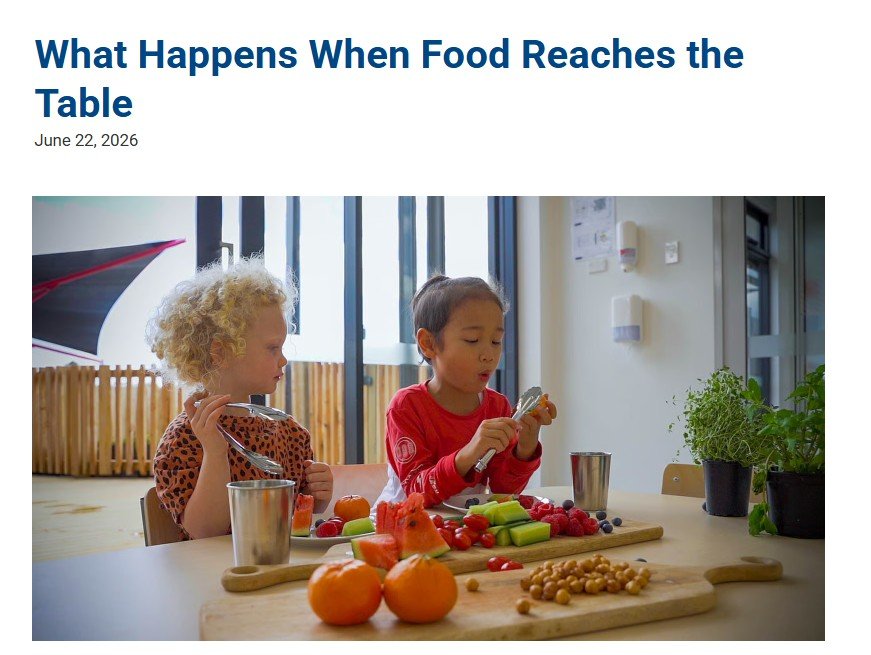
What happens when food reaches the table?
Nutritious food is only part of the picture. This article looks at the adult roles, environments and systems that shape what happens once food reaches children.
Early Childhood Council
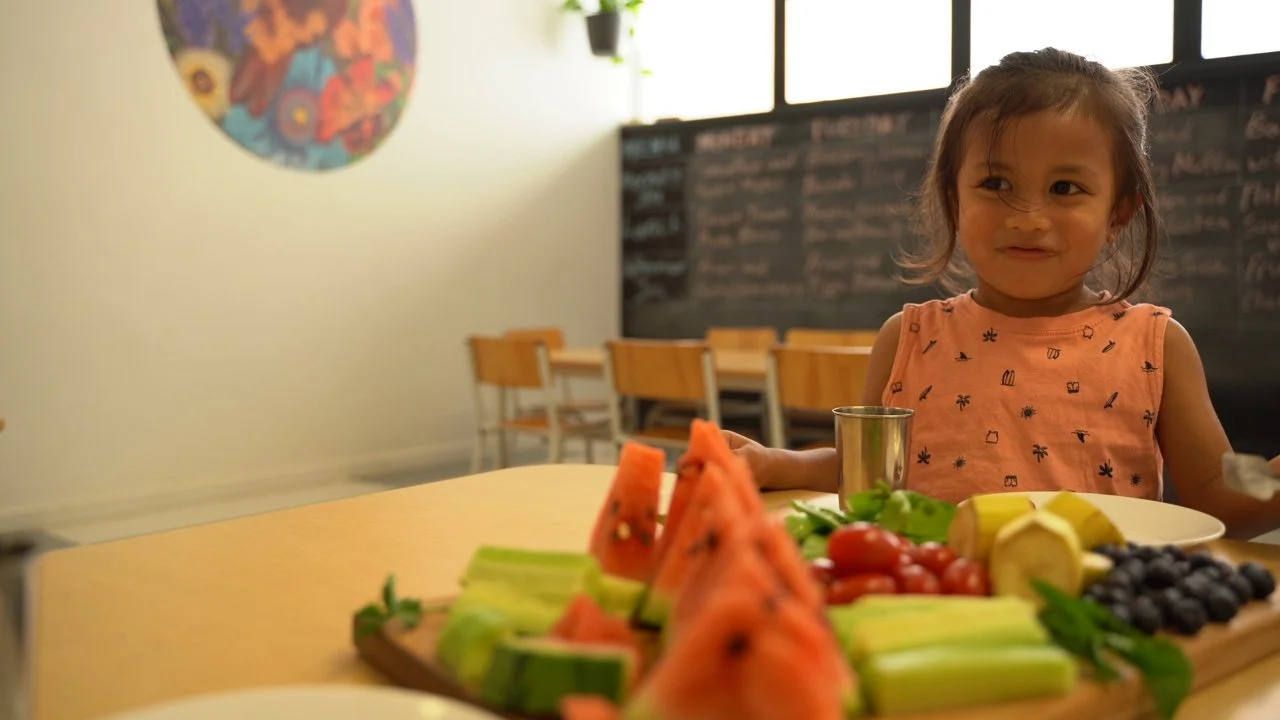
What happens when food reaches the table?
There’s a moment, just before anything is said, when food reaches the table–and if you watch it closely enough, it tells you almost everything about how that mealtime will unfold.
Respect Isn’t on the Plate — It’s in the Practice
Respect for food is not something children learn through reminders or rules. It develops through the language, rhythms, relationships and everyday systems surrounding the meal.
Published in The Space, Issue 82, Summer 2025/26
Redefining snack time
With Nurture's founding vision to provide quality nutrition and wellbeing as part of our curriculum was the desire to redefine snack times.
Published in Nurture Early Learning Blog, Feb 2021
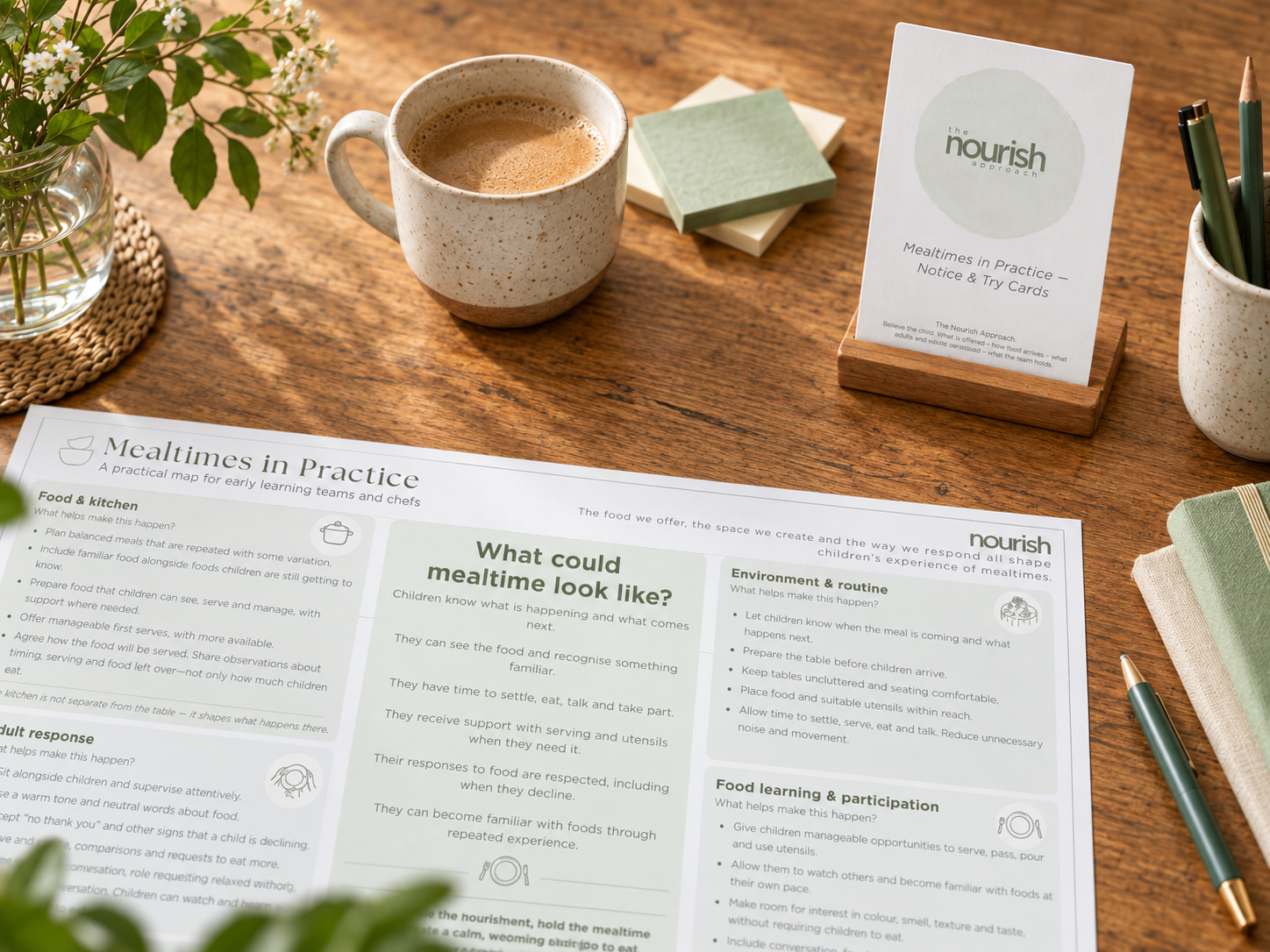
Mealtimes in Practice is a light, practical introduction to Nourish mealtime culture for early learning teams.
Designed for educators, chefs/cooks and team leaders, it helps teams see what calmer, more connected mealtimes can look like, recognise what is already working, and identify where a little more attention may be useful.
The digital set includes:
Mealtimes in Practice A3 Fold-out Map — a double-sided sheet that opens into a full mealtime map, showing how food and kitchen systems, environment and routine, adult responses, and children’s food learning all contribute to the experience of eating.
Mealtimes in Practice — Notice & Try Cards — a small A6 card set that brings familiar mealtime moments into focus. Notice cards help teams look more closely at what is already happening; Try cards offer one small shift to explore and revisit together.
The set is designed to be useful at a glance. It gives teams solid information, practical ideas and a clearer sense of where to begin, without turning mealtimes into another programme to complete.
When a topic needs deeper exploration, the map and cards also point towards the wider Nourish resource library, including Practice Notes and further professional learning.
Digital download — NZ$10
Printing
The map is designed to print double-sided on A3 and fold in half. The cards are designed at A6 size; when printing, choose Actual size or 100% scale rather than Fit to page to preserve the intended card size.
Mealtimes in Practice — Digital Set
A practical map and Notice & Try card set for early learning teams and chefs.
A light, practical introduction to mealtime culture.
See what calmer, more connected mealtimes can look like, what helps make that possible, and where your team might begin.
Includes the A3 Mealtimes in Practice Map and the Notice & Try Cards.
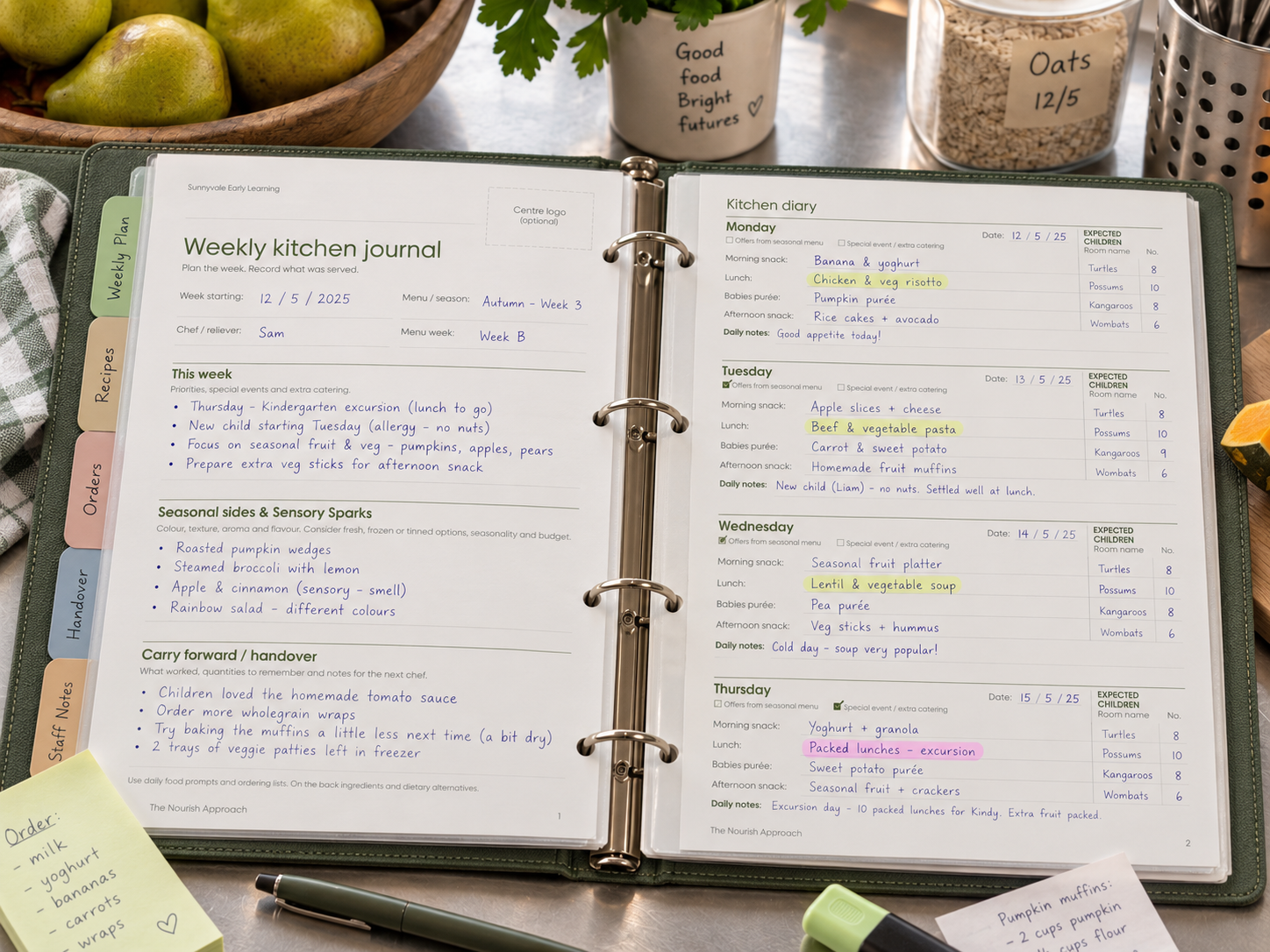
Plan the week. Record what was served.
A practical kitchen operations resource for early learning chefs and cooks.
The Weekly Kitchen Journal is a working tool for organising the kitchen week. It brings weekly planning, daily preparation reminders, ordering and food records into one place—giving the cook somewhere to keep the details that support the day-to-day running of the kitchen.
Use it as the weekly working hub within your centre’s kitchen folder or operations binder, alongside your menus, current recipes and dietary instructions. Keep it close at hand to note expected children, plan seasonal sides and Sensory Sparks, organise preparation, record menu changes and keep track of suppliers, order deadlines and deliveries.
Space for priorities, special events and handover notes helps useful kitchen knowledge carry forward: what worked, quantities to remember and what the next cook needs to know. The journal also makes the kitchen’s routines and decisions visible to centre leaders and provides a practical reference for relieving cooks.
A dedicated ingredients record captures what actually went into each meal and snack, including dietary alternatives and changes made on the day—not simply what appeared on the planned menu. This records food prepared and offered, rather than what an individual child ate.
Print a fresh journal each week, keep the current copy easy to find, and file completed journals in date order to build a practical record of your kitchen’s work over time.
Your download includes:
A4 journal: a four-page version for double-sided printing.
A3 booklet: the same journal arranged for double-sided printing and folding into a four-page booklet.
User guide: practical instructions for planning, recording ingredients, printing and filing.
Printable PDF resource. No physical product is supplied. Save a clean master and print a fresh journal each week.
One purchase covers ongoing use within one early learning centre. Print fresh copies as needed for your team. Please purchase a separate copy for each additional centre.
Centre personalisation
The journal is ready to print and complete by hand. Adding your centre’s logo is optional. For a personalised master with your centre name and logo added, please enquire by email.
Weekly Kitchen Journal — Digital Set
A practical kitchen operations resource for early learning chefs and cooks.
Bring weekly planning, preparation reminders, ordering, ingredient records and handover notes into one place—a working hub for the kitchen week that keeps useful knowledge ready for the next cook.
Includes the A4 journal, A3 print-and-fold booklet and user guide. Print fresh copies each week for your kitchen binder.
Field Notes
Longer reads from the thinking behind Nourish.
Field Notes begin with the everyday questions that arise around food and mealtimes, then follow them into research, theory and practice. They are a place to look more closely at what we are noticing, why it might matter, and what it could mean for the way we work.
At the Tip of Our Tongues
Mealtime language, pressure and where responsibility sits
What are our everyday words quietly asking children to carry? A closer look at encouragement, praise, sensory language, courtesy and the small shifts that can help keep nourishment and responsibility with adults while giving children more language for their own experience.
When Pedagogy Reaches the Table
Bringing the capable child all the way to lunch
What changes when the thinking we bring to the rest of the early learning day continues through the mealtime? This Field Note explores choice, environment, relationships, participation and food curiosity, and asks why pedagogy so often seems to stop when lunch begins.
From Squish to Spoon
Texture, sensory play and learning to eat
A kitchen-bench observation about children meeting wet, sticky, smooth and lumpy textures became a wider exploration of sensory development and food learning. This Field Note looks at how play can offer another low-pressure place for children to become familiar with the sensations they may later encounter in food.
Food as Curriculum: The Global Pedagogy of the Plate
When food becomes a context for learning, culture and connection
What changes when we stop treating food only as nutrition and begin to notice what children can learn through ingredients, cooking and shared meals? Drawing on Reggio Emilia, European taste education and food-as-curriculum approaches, this Field Note explores how food can support sensory curiosity, language, culture, relationship and participation — while nutrition remains embedded in what adults provide rather than becoming a lesson children are expected to perform at the table.
Practical resources
Small, practical ideas to read, save and use in everyday practice.
From Squish to Spoon
Supporting texture confidence through play
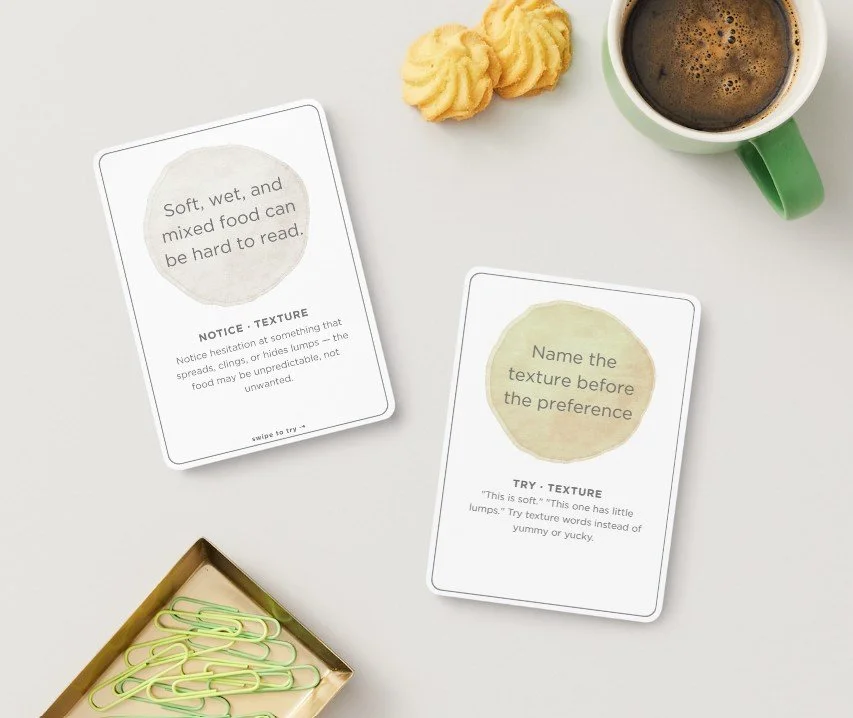
A free digital micro-deck exploring how sensory play can give children another place to meet wet, sticky, smooth, lumpy and changing sensations—through their hands, in play.
This micro deck sits alongside the full field note, From Squish to Spoon, where I share the kitchen-bench observations and research trail that shaped the resource.
Designed for viewing on a phone or tablet.
Whose Job Is It?
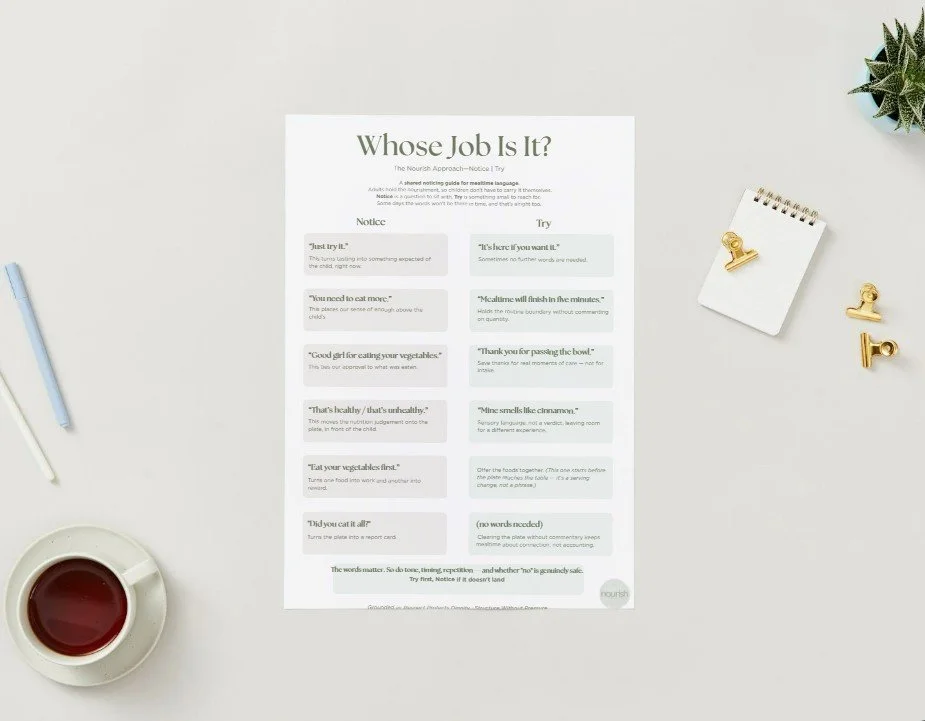
A shared noticing guide for mealtime language.
A printable A3 guide to help early learning teams notice how everyday language can quietly create pressure—or protect children's autonomy, dignity and confidence.
Read the thinking behind the poster
explores the research, theory and everyday observations behind Whose Job Is It?—from encouragement and praise to sensory language, role modelling, silence and the question of where responsibility sits. The poster then brings that thinking into one practical A3 noticing tool.
Looking for support specific to your setting?
Explore how Nourish can support your food systems, kitchen practice and mealtime culture.